
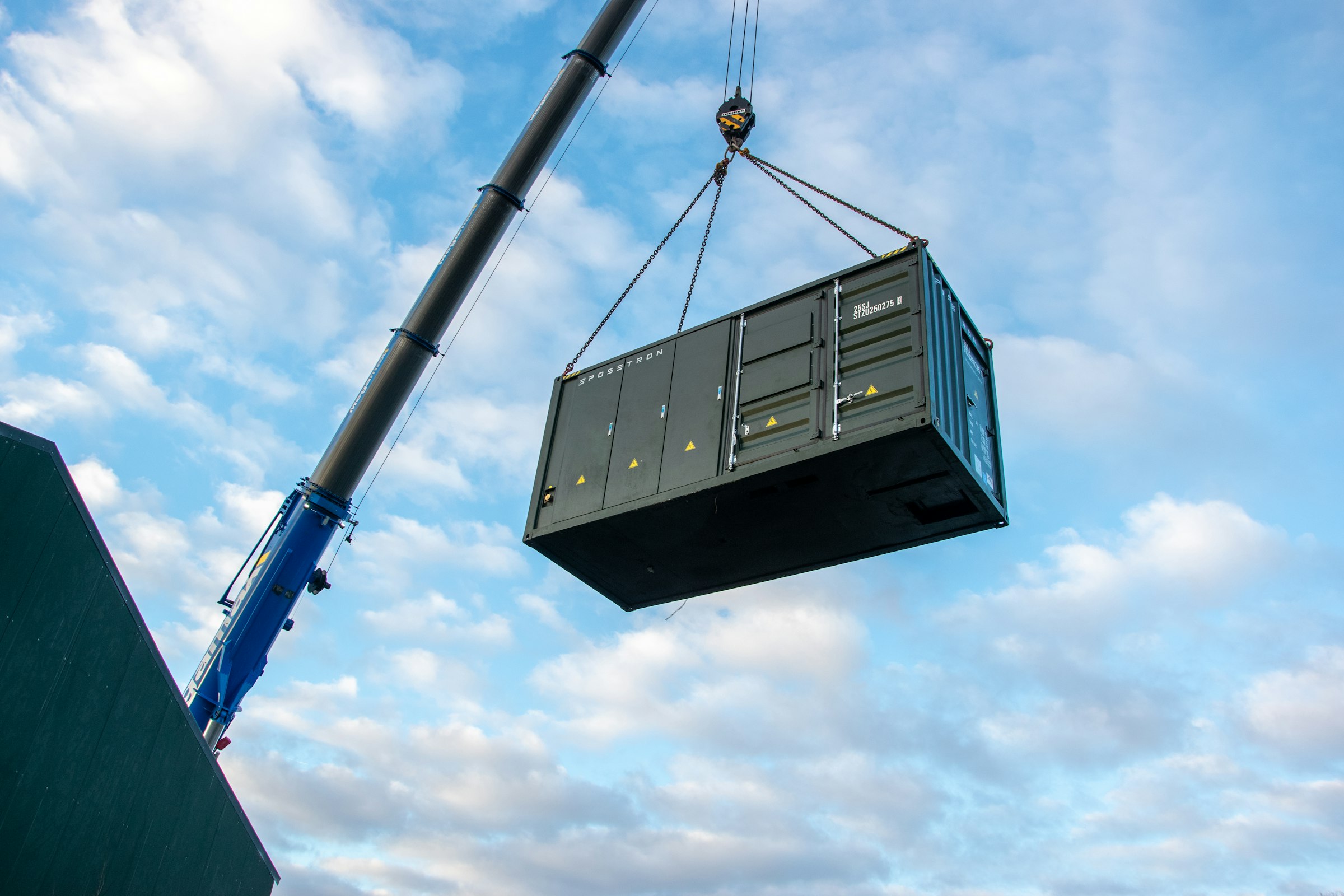
Five years ago, battery storage in African power procurement was mostly a line in a least-cost plan. It is now being tendered. South Africa has run several rounds of a dedicated storage programme, drawing many more bids than there was capacity on offer, and utilities elsewhere are adding storage to solar tenders or preparing standalone procurements of their own.
We have worked with sponsors, lenders and public buyers on storage over that period. The early rounds have been instructive, mostly because they show where a well-intentioned tender document turns into a risk premium. The batteries themselves are rarely the difficulty. The contract usually is.
Standalone or paired with solar
Utilities have taken two routes. The first is solar-plus-storage, where the battery sits behind the same connection as a PV plant and is sized to shift midday output into the evening peak, or to firm output against passing cloud. It is simpler to procure, shares land and grid works, and fits an existing PPA template. The cost is flexibility. The battery mostly serves the plant it is attached to, and the buyer pays a blended energy tariff with the storage cost folded inside it.
The second route is standalone storage at substations the utility chooses, contracted as a service. South Africa’s programme took this approach, procuring four-hour systems at substations nominated by the utility. Standalone storage lets the system operator use the asset for peak shaving, reserves and congestion relief. It also needs a contract that most utilities have never written.
Our view is that for a first procurement in a smaller system, solar-plus-storage with a defined dispatch window is usually the faster path to financial close. Standalone storage makes sense once the operator has the control room capability and the grid code to use it.
How the payment is structured
Three structures have emerged. A capacity payment pays a fixed monthly amount per MW or MWh made available, adjusted for measured availability. A tolling arrangement goes further: the buyer supplies the charging energy, controls dispatch and pays a fee for the service, so the owner carries no energy price risk. Hybrids pay a smaller capacity charge plus a fee per MWh discharged.
Lenders favour the first two because they look like a contracted annuity. Where a tender tied most of the revenue to energy discharged, or to how often the utility chose to call the asset, bidders treated it as merchant exposure. Debt was sized on the fixed element only, with the gap filled by more expensive equity.
Every risk a storage tender leaves undefined comes back as a line in the tariff.
Degradation, augmentation and the warranty stack
Lithium-ion cells lose capacity with every cycle and with time. A four-hour system on day one will not deliver four hours in year twelve without new modules. The tenders that worked best stated the usable capacity the buyer needed throughout the term, set a cycling allowance (often around one full cycle a day) and left the owner to plan augmentation. Tenders that were silent on cycling, or allowed unlimited dispatch, drew bids sized for the worst case.
Round-trip efficiency is the other number that matters. Where the buyer supplies charging energy, it reasonably wants a guaranteed efficiency, and bidders will give one. What they priced heavily were efficiency penalties with no cap and no allowance for auxiliary load in hot climates.
Lenders then check that the guarantees line up: the integrator’s capacity, availability and efficiency guarantees should match the obligations in the offtake contract, with liability caps that bear some relation to the revenue at risk. Where the cell supplier, the integrator and the EPC contractor each warranted something slightly different, we saw lenders ask for larger reserve accounts or sponsor support until the gaps were closed.
Dispatch, grid code and currency
Many grid codes in the region were written for thermal and hydro plant. They say little about state of charge, ramp rates for inverter-based plant or who decides when a battery charges. Bidders priced that uncertainty. The better tenders attached a dispatch protocol to the contract: a defined number of cycles, notice periods, a minimum state of charge the operator could rely on, and a rule that the owner is paid for availability when the operator chooses not to call the asset or the grid cannot take it.
Then there is currency. Batteries are imported, priced in dollars and largely financed in dollars. Payments in local currency without indexation are very hard to finance at a sensible price. Tenders that indexed tariffs to the dollar, or paid a portion in hard currency, drew more bids and tighter pricing. Where the utility’s credit was weak, the projects that progressed relied on a government support agreement, a liquidity facility or a DFI guarantee.
Across the rounds we have followed, the items bidders priced most heavily were consistent: uncapped cycling, revenue linked to dispatch the owner does not control, connection works at utility substations with no compensation if they run late, unindexed local currency payments and change-in-law exposure on import duties for battery equipment. Each can be allocated clearly at little cost to the buyer.
For a first storage tender, we would suggest the following.
- Decide first what the battery is for (evening peak, reserves, solar firming) and let that set the duration and the cycling allowance.
- Pay mainly for capacity made available, and keep any energy-linked element small.
- State the usable capacity required for the full term and leave augmentation to the owner.
- Attach a dispatch protocol to the contract rather than relying on a grid code written for other technologies.
- Index payments to the currency the project is financed in, and put payment security in place before bids are due.
- Take responsibility for connection works you control, with deemed availability if they are late.
Storage will be part of most power procurement in the region within a few years. The buyers who get the first contract right will find the second round cheaper, faster and better attended.