
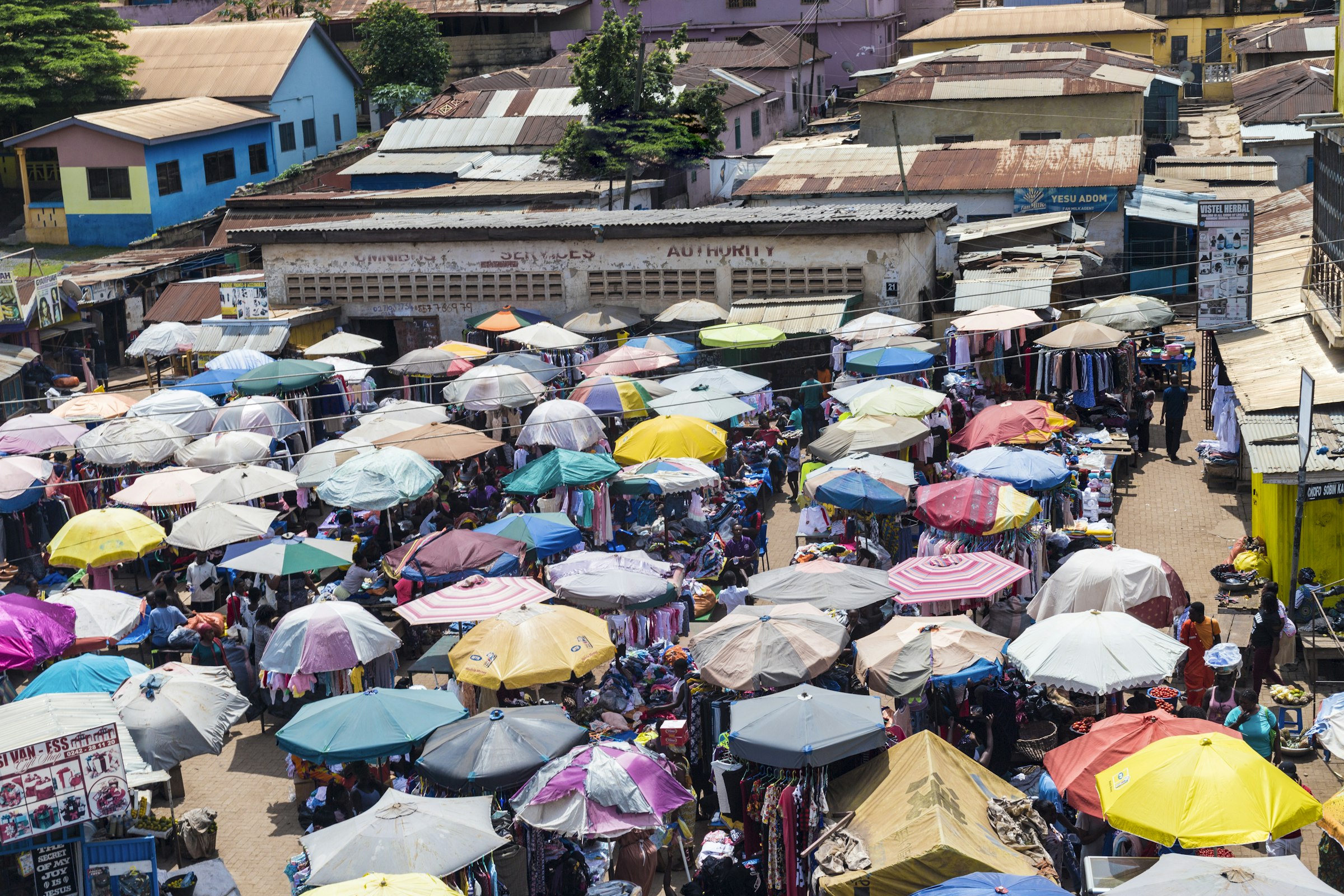
Every few weeks a client tells us their product is made in Ghana and therefore qualifies for AfCFTA preferences. Sometimes it does. Often the answer turns on a line in an annex nobody in the business has read: the product-specific rule for that tariff heading. Preferential tariffs are available only to goods that originate in a State Party, and origin is a legal test with its own evidence requirements.
The test sits in Annex 2 to the Protocol on Trade in Goods and its appendices. It is more workable than its reputation suggests, but it rewards preparation. What follows is how we take exporters through it, in the order we would do the work.
Two routes to origin
A good originates in one of two ways. The first is being wholly obtained: grown, born, raised, mined, harvested or fished in a State Party, or made there entirely from such materials. Cocoa beans from Côte d’Ivoire, cattle raised in Kenya and ore mined in Zambia are the textbook cases. It is the simplest route and the strictest: one imported input rules it out.
Most manufactured goods qualify, if at all, by being sufficiently worked or processed. The AfCFTA uses four general tools here. A value added rule requires a minimum share of the product’s value to be created locally. A non-originating material content rule caps the value of inputs from outside the AfCFTA, expressed as a share of the ex-works price. A change of tariff heading rule requires imported materials to sit under a different HS heading from the finished product, showing genuine transformation. A specific process rule names an operation that must happen locally, such as a chemical reaction or a defined stage of manufacture.
Which tool applies is set product by product in Appendix IV, the schedule of product-specific rules. Some headings offer a choice between two tests; others combine them. Whatever the rule, certain operations never confer origin on their own: preserving goods for transport, simple packing and repacking, labelling, simple mixing and simple assembly of parts. A business that imports finished goods in bulk and repackages them has not created an originating product, however much it spent on the packing line.
Cumulation is where regional value chains pay off
Materials originating in another State Party count as originating when you process them further. A Kenyan garment maker using yarn spun in Egypt, or a Ghanaian processor using Ivorian cocoa butter, can treat those inputs as local for the origin test, provided the work done in the exporting country goes beyond the insufficient operations above.
This is the provision that makes the AfCFTA more than a set of bilateral deals, and it is the one exporters most often fail to use, usually because they cannot document it. The annex provides a standard supplier’s declaration in which your supplier confirms the origin of what they sold you. Ask for it when you place the order. Chasing it after a customs query is slow and sometimes impossible.
The certificate and who issues it
Proof of origin normally takes the form of an AfCFTA certificate of origin. The exporter applies; the competent authority designated by the exporting State Party issues it. In most countries that authority is the customs administration, in some the trade ministry or a body acting for it. The certificate is valid for 12 months from issue and must be presented to customs in the importing country within that period. The annex also provides for an origin declaration made by the exporter on the commercial documents, which approved exporters can use instead of a certificate. Check that the scheme is running in your country before relying on it.
Keep the records. Customs in the importing country can ask the exporting authority to verify a certificate after the goods have cleared, and the verification lands on your files: bills of materials, supplier’s declarations and the cost sheets behind any value calculation. We advise clients to build an origin file for each product before the first shipment and to update it whenever a supplier changes.
Origin is decided at the purchase order, long before the goods reach a border.
What is still open
Agreement on the product-specific rules has come in stages. Most tariff lines are settled, but a small group took far longer, chiefly textiles and clothing and automotive products, where countries that grow cotton or assemble vehicles want different things from those that process or import. Trade ministers reached consensus in late 2025 on a transitional approach for these lines, and during 2026 a provisional arrangement for textiles has leaned on the equivalent rules of the regional economic communities. Final continental rules are not yet in place for every line.
If your product sits in one of these chapters, take written advice on the rule that applies on the day you ship, and expect it to change. The same goes for goods made in special economic zones, whose treatment under the agreement has been one of the slower general questions to resolve.
Before you quote an AfCFTA price
- Classify the product correctly at six-digit HS level, and get a second opinion if the heading is arguable.
- Find the product-specific rule for that heading in Appendix IV and write down exactly what it requires.
- Build a bill of materials showing each input’s tariff heading, origin and value.
- Run the test on real costs at ex-works price, then again with your cheapest alternative supplier.
- Collect supplier’s declarations for every input you treat as originating under cumulation.
- Confirm that both your country and the buyer’s are applying AfCFTA tariff schedules at the border.
- Register with the competent authority, and keep each origin file for the full retention period; we treat five years as the minimum.
None of this is difficult once it is set up. The exporters who struggle are the ones who discover the rule after agreeing a price with a buyer in another market. Do the origin work first, and the tariff saving is usually there to be had.